
Welcome to the WC Floors FAQ page. Here you’ll find clear answers to the most common questions about flooring installation, refinishing, staircase restoration, maintenance, warranty, scheduling, and more.
If you don’t see your question here, call us anytime, we’re happy to help!
GENERAL QUESTIONS
WC Floors offers a complete range of professional flooring and refinishing services for residential and commercial properties. Our expertise covers every stage of transforming your floors — from installation to restoration — using industry-leading tools, premium materials, and skilled craftsmanship. Our services include:
-
Hardwood Floor Installation (solid and engineered)
-
Hardwood Floor Refinishing with dustless sanding and premium finishes
-
Staircase Refinishing, including treads, risers, handrails, and balusters
-
Luxury Vinyl Plank (LVP) Installation, including SPC, WPC, click-lock, and glue-down
-
Laminate Flooring Installation
-
Tile Installation, including ceramic, porcelain, and natural stone
-
Interior Molding Installation, such as baseboards, casings, and crown molding
-
Subfloor Repairs, leveling, and preparation
-
Floor repairs, including board replacement, scratch repair, and blending work
WC Floors delivers high-quality work with clear communication, clean work areas, and results that enhance the beauty, comfort, and value of your home.
Yes. WC Floors is fully licensed, insured, and compliant with all state and local regulations required to perform flooring installation, refinishing, and home improvement services in New Jersey. Our insurance policies include both liability coverage and worker’s compensation, which protects our clients, their property, and our team throughout every project.
This means you can feel confident that:
-
Your home is protected against accidental damages
-
Our team members are professionally covered while working on your property
-
All work is performed by qualified, authorized professionals
-
You are hiring a trustworthy, legally compliant flooring company
We prioritize safety, professionalism, and accountability on every job. Documentation can be provided upon request.
Yes. WC Floors offers free, no-obligation in-home estimates for all flooring, refinishing, and installation projects. During your appointment, one of our specialists will:
-
Evaluate the condition of your existing floors
-
Measure all necessary areas
-
Identify any subfloor or structural concerns
-
Discuss design options, stain colors, and material choices
-
Explain the installation or refinishing process
-
Provide a clear, detailed written estimate with transparent pricing
Our estimates are designed to give you an accurate understanding of the scope of work, pricing, and timeline before any commitment. There are no hidden fees, and you are under no obligation to proceed unless you choose to move forward with the project.
If additional inspections are required (such as moisture testing, demolition assessment, or complex structural issues), we will inform you ahead of time.
Yes. WC Floors proudly offers a full mobile showroom experience, bringing high-quality flooring samples directly to your home. This allows you to compare colors, textures, and materials in your own lighting and alongside your existing décor, which is the most accurate way to choose flooring.
Our mobile showroom includes:
-
A wide selection of hardwood, LVP, laminate, and tile samples
-
Multiple stain color options for refinishing
-
Finish sheen samples (matte, satin, semi-gloss, gloss)
-
Expert guidance from our specialists to help you choose the right product
Viewing samples in your home ensures better color accuracy, faster decision-making, and a more personalized experience. This service is included as part of your free in-home estimate.
WC Floors provides a limited workmanship warranty that covers defects directly related to our labor during flooring installation or hardwood refinishing. This means we guarantee that all work performed by our team meets professional industry standards. If an issue arises as a direct result of improper installation, sanding, staining, or finish application, WC Floors will repair or correct the problem at no additional cost within the warranty period.
Our warranty specifically covers:
-
Installation workmanship errors, such as improperly secured boards, misaligned planks, or fastening issues.
-
Refinishing workmanship issues, such as sanding skips, uneven stain application, or coating defects resulting from our application process.
-
Tile or molding installation errors, such as loose pieces or misalignment caused by installation technique.
-
Stair refinishing workmanship defects, including uneven finish or improper sanding caused by labor, not by wood conditions.
This warranty applies only to workmanship performed by WC Floors and does not cover materials or manufacturer defects. Any concerns related to flooring products, finish brands, or material quality must be handled through the manufacturer’s warranty.
Our goal is to ensure that every customer receives exceptional craftsmanship, clear communication, and confidence in the quality of our work.
The following issues are not covered because they result from environmental conditions, improper use, or external factors outside of WC Floors’ control:
-
Scratches, dents, and gouges from daily use
-
Pet-related damage, including stains and nail scratches
-
Water leaks, spills, or moisture-related issues
-
Damage caused by improper or harsh cleaning products
-
Damage caused by other contractors entering the work area
-
Wood movement due to improper humidity levels
-
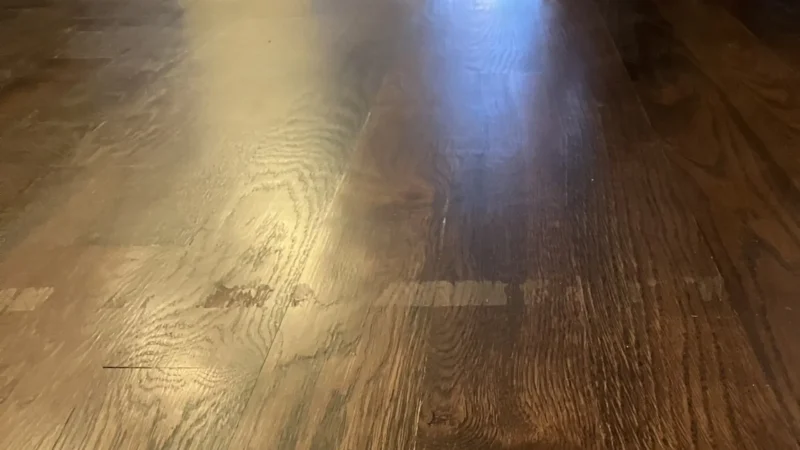
Any damage caused by blue tape, masking tape, painter’s tape, or adhesive tape applied to freshly finished floors
These conditions fall under natural wear, environmental factors, or user-caused issues and are therefore excluded.
Applying blue tape or any adhesive tape to newly finished floors can pull, peel, or damage the fresh finish. Hardwood finishes require time to cure properly, and adhesives interfere with this curing process.
For this reason, tape should not be applied directly on floors after refinishing, and any damage caused by tape is not covered under warranty.
Yes. WC Floors regularly partners with realtors, interior designers, architects, contractors, and property managers on both residential and commercial projects. We provide reliable scheduling, professional communication, and high-quality craftsmanship to support time-sensitive renovations, home sales, staging projects, and construction timelines. We are committed to being a trusted flooring partner for industry professionals.
WC Floors provides a 1-year limited workmanship warranty, beginning on the date the project is completed. This warranty covers labor-related defects only and does not cover materials or manufacturer related issues.
We recommend scheduling your flooring project at least 2–4 weeks in advance, especially during busy seasons such as spring and fall. This allows time to secure materials, finalize stain or product selections, and reserve your preferred installation dates on our calendar.
For larger projects or jobs requiring specialty materials, demolition, or extensive preparation, booking even earlier 4–6 weeks in advance is ideal to avoid delays.
However, WC Floors will always do our best to accommodate urgent or fast-track projects when openings are available. The sooner you reach out, the better we can plan your project and ensure a smooth, timely experience.
You are not required to remain home during the project. Many clients choose to leave for comfort, convenience, or to avoid noise and odors during sanding and finishing. However, you must ensure that our team has full access to the property, including all work areas, electrical panel, and any rooms needed for equipment setup.
If you prefer to stay home, you are welcome to do so, but please note:
-
Work areas must remain completely clear at all times.
-
You may not walk on the floors until we confirm they are safe to enter.
-
Stains and finishes need proper drying and curing, which may limit access to certain rooms or stairs.
-
Some phases of the project may produce noise, odors, or vibration from sanding equipment.
At the end of each day, our team will update you on progress, access restrictions, and the next steps. Your comfort and safety are always a priority.
WC Floors accepts a variety of payment methods to ensure a convenient and smooth transaction process for all clients. We currently accept:
-
Credit and Debit Cards (Visa, MasterCard, Discover, American Express)
-
Bank Transfers / ACH Payments
-
Personal or Business Checks
-
Cash Payments
All accepted payment options will be clearly listed on your estimate or invoice. Please note that certain electronic or card payments may include a small processing fee, which will be disclosed in advance. Final payment is due upon completion of the project unless otherwise specified in your contract.
WC Floors can move appliances and certain pieces of furniture upon request, but this service must be included in your estimate. Standard installation does not automatically include appliance or furniture moving.
For appliances such as refrigerators, stoves, washers, and dryers, we can relocate them as long as the connections are safe, accessible, and in good working condition. However:
-
Built-in appliances
-
Gas appliances
-
Dishwashers
-
Appliances with damaged or old connections
may require a licensed technician to disconnect or reconnect safely.
Customers are responsible for removing all small items, décor, fragile objects, and personal belongings from the work area prior to installation. Heavy furniture, pianos, aquariums, and specialty items may require professional movers and are not included in standard services.
If additional labor is required on the day of the job because items were not moved as agreed, extra charges may apply and project delays are possible.
Yes. All furniture, décor, electronics, and personal items must be removed from the work area before our team arrives, unless your estimate specifically includes furniture moving. Proper space clearance allows us to work efficiently and safely. If last-minute furniture moving is required, additional charges may apply.
Any additional work not included in the original estimate must be approved through a written change order before it is performed. This includes extra repairs, leveling, stain changes, material upgrades, or unexpected issues uncovered during the project.
The change order will clearly outline the updated scope of work, revised pricing, and any adjustments to the project timeline. Work will only continue once the customer approves the change order in writing to ensure transparency and avoid surprises.
Yes. A 50% labor deposit, plus 100% of all material costs, is required to schedule your project and secure the necessary materials. This payment reserves your position on our work calendar and ensures that all materials are ordered in advance. The exact deposit amount will be clearly stated in your estimate or contract.
Please note that no project can be scheduled until the required deposit has been received.
Material Purchases: Payments for material purchases must clear before scheduling a delivery date and commencement of the project. This ensures that all necessary materials are readily available and allows us to begin work promptly as scheduled.
Deposit Requirements: For material purchases, a full amount deposit is required at least one week in advance to ensure timely procurement and preparation for your project. Additionally, labor projects require a 50% deposit to initiate work, with the remaining balance due day of completion.
Final payment is due upon completion of the project, once all agreed-upon work has been performed. To avoid delays or late fees, we ask that the final balance be paid on the same day the project is completed. Payments may be made using any of the accepted methods listed in your estimate or invoice.
Call us at (908) 399-4408 or request a free estimate online. We’ll schedule a consultation at your convenience.
HARDWOOD FLOOR INSTALLATION FAQ
The duration of a hardwood installation depends on several factors, including the size of the project, the type of hardwood being installed, the condition of the subfloor, and any additional preparation work required.
Most standard installations take 1–3 days, but the timeline may be extended if:
-
Subfloor repairs or leveling are needed
-
Existing flooring must be removed
-
Complex layouts or borders are requested
-
Stairs, closets, or trim work are included
Once installation is complete, additional time may be needed if the floor requires staining or finishing. During your in-home consultation, WC Floors will provide a clear, accurate timeline based specifically on your project’s scope.
Yes, hardwood can be installed over concrete, but it requires the correct installation method and proper moisture control to ensure long-term stability. Before installation, WC Floors performs a moisture test on the concrete slab to determine whether the humidity levels are safe for hardwood.
Depending on the results, the following options may be recommended:
-
Engineered hardwood (the best option for concrete due to its stability)
-
Floating installation using approved underlayment
-
Glue-down installation with moisture-resistant adhesives
-
Moisture barriers or sealers to protect the wood
-
Self-leveling compounds, if needed, to correct uneven slabs
Solid hardwood is generally not recommended directly over concrete unless additional subfloor systems are installed. During your estimate, we will inspect the concrete and recommend the safest and most durable installation method for your home.
ou may walk on newly installed hardwood floors as soon as the installation is complete, but only while wearing clean socks. This prevents oils, dirt, and debris from damaging the unfinished surface or newly laid boards.
If your hardwood is being stained or finished after installation, the timeline changes:
-
Socks only after 24 hours (once the first coat has dried).
-
No shoes for 48–72 hours.
-
No heavy furniture until after 3–7 days, depending on the type of finish.
-
No area rugs for 30 days to allow full curing and prevent finish imprinting.
These guidelines protect your new floors from scuffs, dents, and premature finish damage while the wood and coatings stabilize. WC Floors will provide specific instructions based on the products used for your project.
We install red oak, white oak, maple, walnut, Brazilian cherry, hickory, and many other domestic and exotic woods.
Solid hardwood is made from a single piece of real wood throughout the entire plank. It can be sanded and refinished multiple times over its lifetime, making it a long-term, premium flooring option. Solid hardwood performs best in stable environments where temperature and humidity are controlled. It is ideal for above-grade areas such as living rooms, dining rooms, and bedrooms.
Engineered hardwood, on the other hand, is constructed with a real hardwood top layer bonded over multiple layers of high-strength plywood. This layered structure gives engineered hardwood greater stability against moisture, temperature changes, and expansion. It is an excellent choice for basements, concrete subfloors, and homes with fluctuating humidity. Engineered hardwood can also be refinished, but the number of times depends on the thickness of the top veneer.
Both options offer the beauty of real wood, but the right choice depends on your home’s conditions and your long-term flooring goals. During your consultation, WC Floors will help you determine which type is best suited for your space.
Yes. In most cases, WC Floors removes the existing flooring before installing new material. Proper removal is essential to ensure a smooth, level, and structurally sound subfloor, which directly affects the durability and appearance of the new floor.
We remove old flooring such as carpet, laminate, damaged hardwood, vinyl, or tile when necessary. Some existing floors may be suitable to install over—such as certain types of vinyl or hardwood—but only if the surface is flat, stable, and in good condition. Our team will evaluate your current flooring during the estimate and determine whether removal is required.
Keep in mind that floor removal requires additional labor, especially for tile or glued-down materials, and this will be clearly outlined in your estimate before work begins. Our goal is to ensure your new floor is installed on the best foundation possible for long-term performance.
WC Floors can move appliances and certain pieces of furniture upon request, but this service must be included in your estimate. Standard hardwood installation does not automatically include appliance or furniture moving.
For appliances such as refrigerators, stoves, washers, and dryers, we can relocate them as long as the connections are safe, accessible, and in good working condition. However:
-
Built-in appliances
-
Gas appliances
-
Dishwashers
-
Appliances with damaged or old connections
may require a licensed technician to disconnect or reconnect safely.
Customers are responsible for removing all small items, décor, fragile objects, and personal belongings from the work area prior to installation. Heavy furniture, pianos, aquariums, and specialty items may require professional movers and are not included in standard services.
If additional labor is required on the day of the job because items were not moved as agreed, extra charges may apply and project delays are possible.
Yes, hardwood flooring can be installed in kitchens, and many homeowners choose it for its warm, elegant appearance. However, kitchens are considered high-moisture, high-traffic areas, so it’s important to understand proper expectations and maintenance.
Hardwood performs very well in kitchens as long as the floor is protected from prolonged moisture exposure. Spills should be wiped immediately, mats should be placed near sinks and appliances, and humidity should be kept in a stable range. Solid hardwood and engineered hardwood both work in kitchens, but engineered hardwood is often recommended because it is more dimensionally stable and resistant to humidity changes.
WC Floors will evaluate your subfloor, moisture levels, and kitchen layout to help you choose the most durable and long-lasting hardwood option for your space.
WC Floors installs transitions with precision to ensure a smooth, safe, and visually seamless connection between hardwood and other flooring surfaces such as tile, LVP, laminate, or carpet. During installation, we evaluate the height difference, material type, and layout of each area to determine the appropriate transition piece.
We use high-quality transition profiles including reducers, T-moldings, stair nosings, thresholds, and custom wood transitions, chosen specifically for each situation. When heights differ, we level or feather the subfloor as needed to create a clean and secure fit. Our goal is to blend the two flooring surfaces so they look intentional, balanced, and professionally finished while preventing tripping hazards and long-term wear issues.
Yes. Hardwood floors must be acclimated before installation to ensure long-term stability and prevent issues such as gapping, cupping, or warping. Acclimation allows the wood to adjust to the temperature and humidity levels inside your home so it can perform properly after installation.
However, industry practice and manufacturer recommendations provide general timing:
✔ Minimum: 3 days
✔ Typical: 5–7 days
✔ Best for wide planks / seasonal extremes: 7–14 days
Final rule: The wood is ready only when moisture readings match NWFA standards, not simply after waiting a certain number of days, but it may vary depending on:
-
The type and thickness of the hardwood
-
Indoor humidity levels
-
Seasonal climate conditions
-
Manufacturer recommendations
During this time, the flooring must be stored inside the home in the areas where it will be installed, with HVAC systems running normally. Proper acclimation is critical and is one of the most important steps to ensure a successful installation and a long-lasting floor.
Environmental Conditions Required (Before, During, After Installation)
✔ Temperature:
Must be kept between 60–80°F (15–27°C).
✔ Humidity:
Indoor relative humidity must stay between 35%–55%, matching normal living conditions for the home.
✔ HVAC System:
Heating and cooling must be running at least 5 days before acclimation begins.
The home must be at normal lived-in conditions.
❌ Do NOT acclimate in:
-
Garages
-
Basements (unless fully conditioned)
-
Porches
-
Rooms without HVAC
Improper environments ruin acclimation.
WC Floors follows a precise installation process to ensure your hardwood floors remain level, stable, and properly supported for years to come. Before any installation begins, we conduct a comprehensive subfloor inspection to check for dips, humps, loose panels, moisture issues, or structural irregularities.
If we identify uneven areas, we correct them using industry approved methods such as floor leveling compounds, subfloor shims, structural reinforcement, or plywood replacement, depending on the situation. Proper subfloor preparation is essential, because hardwood will mirror any imperfections underneath it.
During installation, we use laser levels and straightedge tools to confirm accurate alignment and ensure tight, even seams throughout the room. We also follow the manufacturer’s installation guidelines for expansion gaps and fastening methods to prevent buckling or uneven movement over time.
By combining thorough preparation with expert installation techniques, WC Floors ensures your hardwood floors are installed level, secure, and built for long-term performance.
Yes. WC Floors can install hardwood flooring over radiant heat systems, but it must be done using the correct materials, installation methods, and temperature controls to ensure long-term stability. Not all hardwood products are suitable for radiant heat, so we evaluate the system and recommend the best options.
Engineered hardwood is typically the best choice because it is more dimensionally stable and less prone to expansion or contraction when exposed to heat. Solid hardwood may be used in some cases, but species, board width, and moisture levels must be carefully considered.
For a successful installation, the radiant heat system must:
-
Maintain a consistent surface temperature (usually below 80°F / 27°C)
-
Be turned on at least five days before installation to stabilize the subfloor
-
Operate without sudden temperature changes
-
Maintain proper humidity between 35%–55%
WC Floors will guide you through product selection and installation procedures to ensure your hardwood performs beautifully and safely over radiant heating systems.
Recommended Wood Characteristics for Radiant Heat
✔ Quarter-sawn or Rift-sawn boards
These cuts are more stable and less prone to cupping or gapping.
✔ Narrower plank widths (3″–5″)
Narrower boards handle heat better and reduce visible gaps.
✔ Lower moisture content
Wood must be acclimated and tested before installation.
Best Solid Wood Species for Radiant Heat:
-
White Oak (most stable solid wood option)
-
American Cherry
-
Black Walnut
-
Ash
Species to Avoid:
-
Maple (prone to movement)
-
Beech (very unstable)
-
Brazilian Cherry / Jatoba (reacts strongly to heat)
-
Pine (soft and unstable)
Wide planks should be avoided in solid hardwood installations because wider boards expand and contract more.
HARDWOOD FLOOR REFINISHING FAQ
Hardwood floors should be refinished when they begin to show signs of wear, damage, or surface deterioration. Common indicators include:
-
Visible scratches, scuffs, or dull areas
-
Loss of shine or uneven color
-
Worn finish in high-traffic areas
-
Water marks, stains, or discoloration
-
Splinters, rough patches, or exposed bare wood
-
Faded areas caused by sunlight exposure
If your floors look tired, uneven, or difficult to clean, refinishing is the best way to restore their beauty and protect the wood. Most hardwood floors need refinishing every 7–15 years, depending on lifestyle, foot traffic, pets, and maintenance habits.
Refinishing not only refreshes the appearance, it also adds a new protective layer that extends the life of your floors and prevents long-term damage. During your free consultation, WC Floors will evaluate the condition of your hardwood and recommend whether refinishing, touch-ups, or a full restoration is the best solution for your home.
Yes. WC Floors requires clear, safe access to your home’s electrical panel to connect the 220V power supply used for our professional sanding equipment.
If access is blocked, locked, or unsafe, it may delay the job or require rescheduling. Customers are responsible for ensuring the panel is accessible on the day of service.
How long does hardwood floor refinishing take?
The refinishing process typically takes 2 to 4 days, depending on the size of the project, the number of coats being applied, the type of finish used, and the overall condition of your floors.
Here is a general timeline:
-
Day 1: Furniture removal (if included), preparation, and full sanding of the floors
-
Day 2: Stain application (if desired) and drying time
-
Day 3: First coat of finish applied and left to dry
-
Day 4: Additional coats applied and final curing
Projects with extensive repairs, specialty stains, custom colors, or heavy finish build may require additional time.
Weather and humidity also play a significant role, as cooler or more humid environments can extend drying and curing times.
WC Floors will provide a more accurate timeline during your consultation based on your specific flooring needs.
You can walk on newly refinished floors once the finish has begun to dry, but timing is very important to avoid damage. As a general guideline:
-
After 24 hours: You may walk on the floors with socks only. No shoes, pets, or furniture during this stage.
-
After 48–72 hours: Light use is allowed, but shoes should still be avoided, and furniture should not be moved back yet.
-
After 3–7 days: You may begin placing furniture back carefully, making sure all pieces have felt pads installed to protect the new finish.
-
After 30 days: The finish is fully cured. This is when you can safely place area rugs and use adhesive products such as rug pads.
These timelines help ensure the finish bonds properly and avoids premature scratches, peeling, or surface damage. Allowing your floors the recommended drying and curing time is essential for achieving a long-lasting, beautiful result.
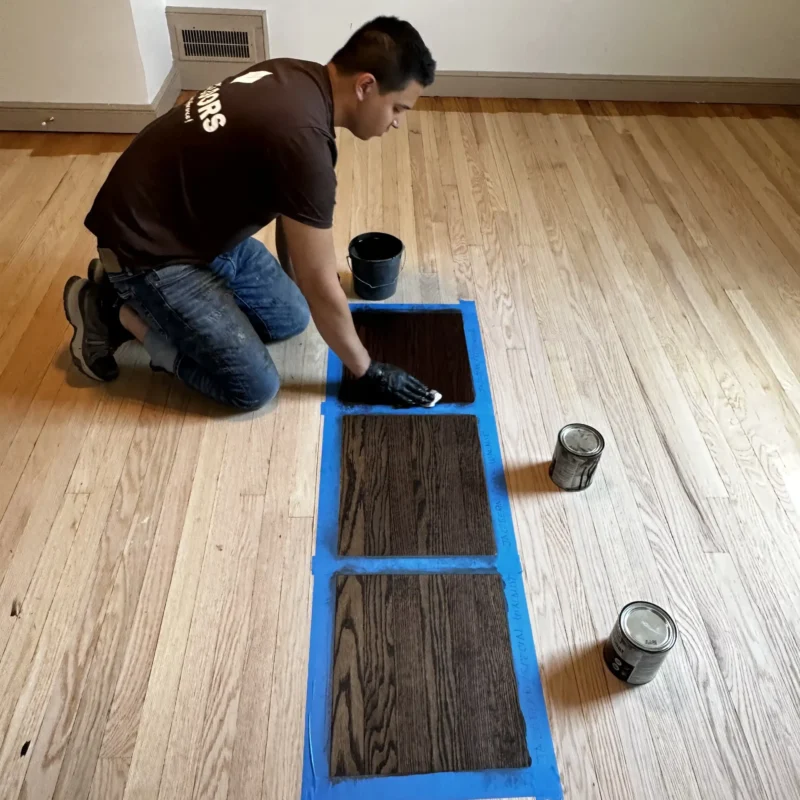
Yes. WC Floors applies real stain samples directly onto your hardwood floor after the initial sanding stage. This gives you an accurate representation of how each color will look on your exact wood, considering its species, grain pattern, age, and natural lighting. Stain charts or online photos cannot replicate this level of accuracy.
We include up to 3 stain color samples at no additional cost as part of our refinishing process. These 3 samples are typically applied side-by-side so you can easily compare tones and choose the one that best fits your style.
If you request more than 3 stain samples, or if additional time is required to test multiple color variations, blends, or custom tones, an extra charge will apply. This covers additional labor, materials, and time needed to properly prepare and apply the expanded sample set.
Once you approve your stain color, we proceed with the full staining process.
Please note:
-
Wood species absorb stain differently.
-
Natural variations in grain can affect how the final color appears.
-
The protective topcoat may slightly deepen or enrich the tone.
Our stain sample process ensures you make a confident, informed color choice before the refinishing continues.
Yes. WC Floors offers professional stain color matching to achieve the closest possible visual consistency across your hardwood floors. However, it is important to understand that perfect color matching is not always possible, and several natural factors influence the final result:
-
Wood species: Different woods absorb stain differently (e.g., red oak vs. white oak).
-
Age of the wood: Older flooring may react differently compared to newly installed boards.
-
Previous finishes: Oils, waxes, and polyurethane residues can affect stain absorption.
-
Sunlight exposure: UV light can lighten or darken sections of the floor over time.
-
Natural grain patterns: Wood has inherent variations that will always show subtle differences.
To ensure accuracy, we apply real stain samples directly on your floor during the refinishing process. This allows you to preview the actual color on your specific wood before we proceed.
While WC Floors strives to achieve the most consistent and harmonious result possible, natural variations in hardwood mean that slight differences should always be expected. These differences are considered a normal characteristic of real wood flooring.
With proper care, a professionally refinished hardwood floor can last 7 to 15 years before needing another full refinishing. The exact lifespan depends on several factors, including foot traffic, pets, furniture movement, environmental conditions, and the type of finish applied. High-traffic households or homes with pets may notice wear sooner, while low-traffic homes can enjoy a much longer lifespan.
To extend the life of your refinished floors, we recommend:
-
Maintaining indoor humidity between 35%–55%
-
Using felt pads on all furniture
-
Keeping pet nails trimmed
-
Cleaning with pH-neutral hardwood-safe products
-
Avoiding moisture, steam mops, and abrasive cleaners
In many cases, applying a maintenance recoat every 3–5 years can refresh the protective layer and delay the need for a full sanding and refinishing, preserving your floors for decades.
Splinters can occasionally appear after sanding and finishing, especially in older floors or floors with pre-existing wood damage. This occurs when tiny wood fibers or lifted grain were not visible before finishing. Even with professional sanding, some splinters remain hidden until the finish dries and hardens.
Because splinters are caused by the natural condition of the wood, not by workmanship, they are not covered under warranty.
If splinters appear after refinishing, the client is responsible for the cost of repairing or re-sanding the affected boards or entire room. WC Floors will gladly provide a repair estimate if needed.
Yes, you may stay in your home during the refinishing process; however, there are important guidelines to follow. The work areas must remain completely inaccessible during sanding, staining, and finishing. Walking through the work zone or entering before the finish is dry can cause permanent damage to the floors.
Depending on the type of finish being applied, you may notice mild odors. Water-based finishes typically produce low odor, while oil-based products may require additional ventilation. We recommend keeping interior doors closed, opening windows when possible, and staying out of refinished areas until the floors are dry enough for safe foot traffic.
If your home layout requires you to cross the project area (for example, to reach bedrooms or bathrooms), you may need to temporarily adjust your living arrangements during the drying period. Our team will inform you of drying times and access restrictions so you can plan accordingly.
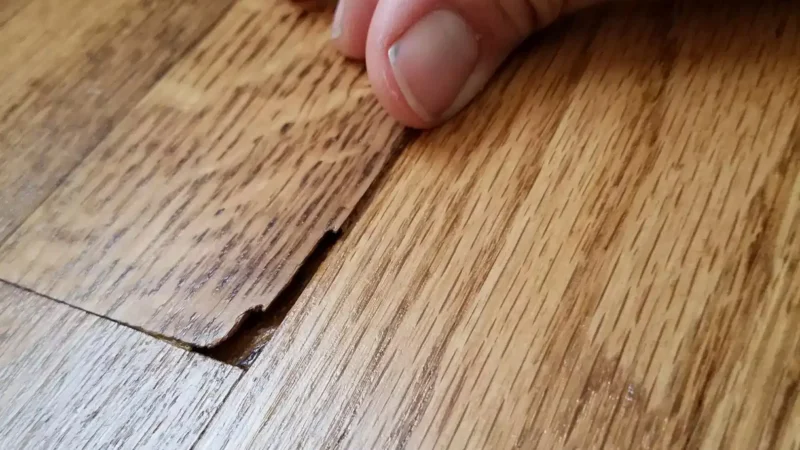
Refinishing improves the surface appearance but does not correct structural or moisture-related issues such as cupping, buckling, or sagging floors.
Cupping is often caused by moisture imbalances; refinishing alone will not remove these problems. WC Floors can assess whether moisture remediation or subfloor repairs are needed before refinishing.
No. Small gaps between hardwood boards are normal and caused by seasonal humidity changes. Refinishing does not close gaps.
Gap filling is optional but not always recommended, as filler can crack or loosen over time due to natural wood movement.
Not always. While sanding removes most surface scratches and discoloration, deep stains, especially dark pet urine marks and long-term water damage, can penetrate far below the wood’s surface. When this happens, even professional sanding may not fully eliminate the discoloration.
Pet urine contains acids and minerals that can permanently alter the wood fibers, often leaving black or dark rings that remain visible after refinishing. Water stains, mold, and previous chemical reactions can also create deep marks that cannot be completely removed.
WC Floors will always sand the floor thoroughly and apply stain samples to help blend the color as best as possible. However, if a stain has penetrated deeply, the only guaranteed solution may be board replacement, which is considered additional work and not included in standard refinishing.
We will point out any visible deep stains during your consultation, but some issues may only become fully noticeable once the old finish has been removed.
WC Floors offers a full range of premium hardwood floor finishes, each designed to provide a different look, level of sheen, and durability. Your finish choice will influence both the appearance of your floors and how well they hide everyday wear. Our primary finish options include:
• Matte Finish
A low-sheen, modern look that minimizes glare and hides scratches extremely well. Ideal for busy households or clients who prefer a natural, soft appearance.
• Satin Finish (Most Popular)
A balanced sheen that offers a clean, elegant look without excessive shine. Satin hides dust and minor imperfections better than gloss finishes, making it the preferred choice for most homeowners.
• Semi-Gloss Finish
Provides a noticeable shine and a polished appearance. Semi-gloss is great for highlighting wood grain but will show small scratches, dust, and pet marks more easily than matte or satin.
• Gloss Finish
The highest level of shine, offering a dramatic, mirror-like look. Gloss is best suited for formal or low-traffic areas, as it highlights every imperfection and requires more ongoing maintenance.
Finish Type Options (Water-Based vs Oil-Based)
WC Floors offers both water-based and oil-based polyurethane finishes:
-
Water-Based Finish:
Fast drying, low odor, environmentally friendly, and retains a lighter, natural wood tone. Great for families who want minimal interruption during refinishing. -
Oil-Based Finish:
Richer color depth, traditional warm tone, and very durable. Takes longer to dry and has stronger odor during application.
During your consultation, we will help you choose the finish that best aligns with your home’s style, lighting, foot traffic, and maintenance expectations.
The duration of odors after refinishing depends on the type of stain and finish used, as well as the ventilation in your home. Water-based finishes typically have very low odor and may dissipate within a few hours to 24 hours. Oil-based products, which are commonly used for their durability and rich appearance, may have a stronger scent and can take 24–72 hours to fully air out.
Proper ventilation plays an important role. Opening windows, using ceiling fans, and allowing air to circulate throughout the home will help the odor dissipate more quickly. Although the smell decreases significantly within the first day or two, the floor may continue curing for several days afterward. If you are sensitive to odors, we can recommend low-VOC or water-based finish options.
Not necessarily. Squeaky floors are typically caused by movement in the subfloor, loose nails, gaps between boards, or structural shifting, not by the surface finish itself. Because refinishing focuses on sanding and applying stain and protective coatings to the top of the hardwood, it does not address the underlying causes of squeaks.
During your consultation, WC Floors will assess your flooring structure. In many cases, squeaks can be reduced or eliminated by tightening subfloor panels, securing loose boards, or adding screws from below. These repairs are considered separate work and are not included in standard refinishing. If subfloor or structural repairs are needed, we will provide recommendations and a separate estimate.
Refinishing improves the appearance and longevity of your floors, but squeaks are related to the structure beneath and may require additional services to correct.
Preparing your home properly is essential for a smooth, efficient, and safe refinishing process. Before our team arrives, please follow these steps to ensure the work area is ready:
1. Remove all furniture and personal belongings
All furniture, rugs, décor, electronics, and fragile items must be cleared from the work area unless your estimate specifically includes furniture moving. This allows our team to sand and refinish without obstruction and prevents accidental damage.
2. Empty closets and surrounding spaces that will be refinished
If closets, hallways, or adjacent rooms are part of the project, please remove clothing, shoes, storage bins, and other items to provide full access.
3. Cover or protect nearby rooms and electronics
Although our dustless sanding system captures up to 98% of dust, some fine particles may still travel. We recommend covering:
-
HVAC vents
-
TVs, computers, and electronics
-
Open shelves or bookcases
-
Items in adjacent rooms
This helps maintain a clean and dust-free environment.
4. Ensure pets and children are safely out of work areas
Pets and children must remain away from sanding and finishing areas due to equipment, noise, odors, and wet finishes.
5. Provide clear access to the electrical panel
Our sanding equipment requires a 220V power connection. Please make sure the electrical panel is easily accessible and not blocked by storage, furniture, or shelving.
6. Maintain proper temperature and ventilation
Before and during refinishing, keep your home at a stable temperature with normal airflow. We may ask to open windows or run fans depending on the finish being applied.
7. Coordinate other contractors before or after, not during the refinishing
Painters, plumbers, movers, and other contractors should not be scheduled at the same time. Foot traffic or dust from other trades can damage or contaminate the finish.
8. Plan your home access during the project
Once sanding or finishing begins, certain areas will be unusable until dry. Plan alternate routes or temporarily relocate rooms that may be affected.
Raised grain or slightly rough texture can sometimes occur when the wood absorbs stain or finish unevenly. This is a natural reaction of the wood, especially in high-porosity species like red oak. WC Floors sands and buffs between coats to minimize this effect, but complete elimination is not always possible.
If additional buffing or touch-up coats are requested beyond what was included in the original scope, the client may incur extra charges. We will always explain the best solution to achieve the smoothest result possible.
Yes, hardwood floor refinishing can be noisy. Sanding machines, vacuums, and other equipment produce noticeable sound throughout the project. If you work from home, have small children, or prefer a quiet environment, we recommend planning accordingly. Noise levels will vary throughout the day, but expect consistent sound during active sanding periods.
es. Most solid hardwood floors can be refinished several times throughout their lifespan, often anywhere from 4 to 6 complete sanding cycles, depending on the thickness of the wood and its overall condition. Each refinishing removes a small amount of wood, so the number of times your floors can be refinished depends on:
-
The thickness of the hardwood boards
-
How many times the floors were refinished in the past
-
The presence of deep scratches, cupping, or structural issues
-
Whether the floor has been sanded unevenly by previous contractors
Engineered hardwood can also be refinished, but the number of times is limited based on the veneer (wear layer) thickness. Some engineered floors can be sanded once, while others may not be suitable for full refinishing.
During your consultation, WC Floors will carefully evaluate your flooring to determine whether it is safe and structurally appropriate to refinish it again. Our goal is to preserve the integrity of your wood while restoring its beauty with the highest-quality results.
Differences around walls, windows, vents, or high-traffic areas can occur due to:
-
Natural wood grain variations
-
Prior sun exposure or UV fading
-
Historical water or pet damage
-
Uneven wear patterns
-
Wood density changes
These variations are natural characteristics of hardwood floors and not workmanship issues.
-
Furniture: 3–7 days (with felt pads installed on all items)
-
Area rugs: 30 days minimum
Rugs trap moisture and heat, which prevents the finish from curing properly and can cause discoloration or peeling.
In many cases, yes, refinishing dramatically improves the appearance of worn hardwood. However, older floors, heavily damaged boards, deep stains, or structural issues may still show minor imperfections.
Our goal is always to restore your floors to the best possible condition while respecting the natural character of the wood.
VINYL LVP & LAMINATE INSTALLATION FAQ
Most Luxury Vinyl Plank (LVP) installations are completed in one day, depending on the size of the space, the condition of the subfloor, and the complexity of the layout. Smaller rooms or straightforward installations can be finished quickly, while larger areas, staircases, or projects requiring subfloor repairs or leveling may extend the timeline to 2–3 days.
During your consultation, WC Floors will evaluate the space and provide an accurate timeframe so you know exactly what to expect from start to finish.
Yes, Luxury Vinyl Plank (LVP) can often be installed over existing flooring, but only if the subfloor and current surface meet industry standards. The existing floor must be flat, level, clean, dry, and structurally sound to ensure proper installation and long-term performance.
LVP may be installed over:
-
Existing hardwood (if stable and level)
-
Tile (if the grout lines are not deep or uneven)
-
Concrete slabs
-
Vinyl or linoleum in good condition
However, installation is not recommended over floors that are loose, damaged, heavily textured, or showing signs of moisture problems. In these cases, removal or additional preparation will be required.
During your free in-home consultation, WC Floors will evaluate the condition of your existing floors and determine whether they are suitable for LVP installation or if corrective work is necessary to achieve a flawless finish.
WC Floors installs all major types of Luxury Vinyl Plank (LVP), each designed to meet different performance and budget needs. During your consultation, we help you select the option that best fits your space, lifestyle, and durability requirements.
Our LVP options include:
-
Rigid Core LVP (SPC):
Made with a stone-plastic composite core, SPC is extremely durable, waterproof, and ideal for high-traffic areas, basements, kitchens, and bathrooms. -
Flexible LVP (WPC):
Features a wood-plastic composite core, offering superior comfort underfoot and enhanced sound absorption—perfect for bedrooms, living rooms, and multi-level homes. -
Glue-Down LVP:
A commercial-grade product designed for maximum stability. It adheres directly to the subfloor, making it ideal for offices, retail spaces, and high-use environments. -
Click-Lock LVP:
A floating installation system that snaps together easily, providing a clean, efficient installation with minimal disruption. Great for residential spaces and remodels.
Each type of LVP offers specific benefits in terms of durability, sound performance, comfort, and water resistance. WC Floors will guide you through the selection process to ensure the best flooring solution for your home or business.
Luxury Vinyl Plank (LVP) and laminate flooring are both popular alternatives to hardwood, but they perform very differently.
LVP (Luxury Vinyl Plank) is a 100% waterproof flooring made from vinyl layers. It is designed to handle moisture, spills, and humidity, making it ideal for:
-
Kitchens
-
Bathrooms
-
Basements
-
Laundry rooms
-
High-traffic areas
LVP is highly durable, quiet underfoot, and resistant to scratches and stains. It closely mimics the look of real wood and is easy to maintain. Because it handles moisture exceptionally well, it is one of the most versatile flooring options available today.
Laminate flooring, on the other hand, is water-resistant but not fully waterproof. It has a wood-based core, which means standing water or high humidity can cause swelling or damage. Laminate is a great choice for:
-
Living rooms
-
Bedrooms
-
Hallways
-
Second floors
Laminate offers excellent scratch resistance and a firm, realistic wood feel underfoot. However, it should be avoided in areas with heavy moisture.
In summary:
-
Choose LVP if you want a waterproof, low-maintenance, highly durable floor suitable for any room.
-
Choose laminate if you want a cost-effective, wood-like feel in dry areas of the home.
WC Floors will help you determine the best option based on your home, lifestyle, and budget.
It depends on the type of flooring and the condition of your subfloor. Many modern Luxury Vinyl Plank (LVP) products come with an attached underlayment, which provides built-in sound reduction, cushioning, and minor moisture protection. In these cases, an additional underlayment may not be necessary and can even interfere with proper locking mechanisms.
Laminate flooring, however, almost always requires an underlayment, especially for floating installations. Underlayment helps with sound absorption, adds comfort underfoot, smooths minor subfloor imperfections, and creates a moisture barrier when needed.
WC Floors evaluates your subfloor during the consultation to determine whether an additional underlayment is recommended. Factors such as moisture levels, concrete vs. wood subfloor, existing flooring, and manufacturer requirements all play a role in ensuring a stable, long-lasting installation.
LVP is durable, but heavy appliances can dent or mark the flooring if placed incorrectly. Always use furniture pads, glides, or protective disks under legs and appliances. Avoid dragging heavy items across the floor, lifting or using sliders prevents damage.
WC Floors can move appliances and certain pieces of furniture upon request, but this service must be included in your estimate. Refinishing service does not automatically include appliance or furniture moving.
For appliances such as refrigerators, stoves, washers, and dryers, we can relocate them as long as the connections are safe, accessible, and in good working condition. However:
-
Built-in appliances
-
Gas appliances
-
Dishwashers
-
Appliances with damaged or old connections
may require a licensed technician to disconnect or reconnect safely.
Customers are responsible for removing all small items, décor, fragile objects, and personal belongings from the work area prior to installation. Heavy furniture, pianos, aquariums, and specialty items may require professional movers and are not included in standard services.
If additional labor is required on the day of the job because items were not moved as agreed, extra charges may apply and project delays are possible.
es. Both Luxury Vinyl Plank (LVP) and laminate flooring are excellent choices for homes with pets, but LVP is generally the superior option. LVP is 100% waterproof, highly scratch-resistant, and easy to clean, making it ideal for households with dogs or cats. Pet accidents, spills, and water bowls are far less likely to damage LVP compared to hardwood or laminate.
Laminate is also durable and scratch-resistant, but it is water-resistant, not waterproof, meaning standing water or repeated moisture exposure can cause swelling or damage. If you choose laminate, you’ll need to clean spills quickly and use protective mats around pet bowls.
Both flooring types perform best with:
-
Regular cleaning to remove pet hair and grit
-
Nail trimming to prevent scratches
-
Soft, non-rubber-backed mats to avoid discoloration
Overall, LVP is the most pet-friendly flooring option we offer, providing durability, comfort, and long-lasting performance in busy pet households.
LVP and laminate can produce some sound underfoot, especially in areas where the subfloor is slightly uneven or when the proper underlayment is not used. Laminate floors, in particular, tend to have a louder, hollow, or tapping sound compared to LVP because they are floating floors with a harder core.
Luxury Vinyl Plank (LVP) is generally quieter thanks to its softer, flexible composition. When installed with a high-quality underlayment or attached padding, LVP provides excellent sound reduction and a more comfortable feel.
If noise is a concern, WC Floors will recommend the best combination of materials, underlayment, and installation method to ensure optimal sound performance in your home.
LVP and laminate floors are designed for durability and low maintenance, but proper care is essential to protect their appearance and lifespan. To keep your floors in excellent condition, follow these guidelines:
✔ Clean regularly with a microfiber mop or vacuum
Remove dust, dirt, and grit frequently, as abrasive particles can cause surface wear over time. When vacuuming, always use the hard-floor setting (no beater bar).
✔ Use only pH-neutral cleaners made for vinyl or laminate
Avoid harsh chemicals. Approved cleaners will remove residue without damaging the protective wear layer.
✔ Wipe spills immediately
LVP is waterproof, but standing liquids can seep into edges or encourage mold growth. Laminate is water-resistant, not waterproof, so quick cleanup is critical.
✔ Use furniture pads and lift—never drag—heavy items
Install felt pads under all furniture legs and replace them periodically. Sliding heavy objects can cause deep scratches or plank separation.
✔ Keep indoor humidity stable
Maintain indoor humidity between 35%–55% to prevent expansion and contraction, especially with laminate floors.
✔ Avoid steam mops, waxes, and abrasive tools
Steam can force moisture into the planks, while wax or polish can damage or dull the surface. Abrasive scrub pads may scratch the finish.
✔ Use the right floor mats
Choose rugs with non-rubber, breathable backing. Rubber and latex can discolor or stain LVP and laminate flooring.
By following these maintenance steps, your LVP or laminate floors will remain beautiful, stable, and long-lasting for many years.
In many cases, yes. Removing old flooring is often necessary to ensure a smooth, level, and stable surface, which is critical for a long-lasting LVP or laminate installation. Certain existing floors—such as carpet, damaged laminate, uneven tile, or warped hardwood, must be removed because they can prevent the new floor from locking properly or create noise, movement, or uneven seams over time.
However, some types of flooring may be suitable to remain in place, depending on their condition. For example, LVP can sometimes be installed over well-bonded tile or a flat, stable surface. During your free in-home consultation, WC Floors will thoroughly inspect the existing floor and subfloor, check for moisture issues, evaluate flatness, and determine whether removal is required.
If removal is necessary, we will include it clearly in your estimate so you fully understand the scope of work before the project begins.
Yes. WC Floors performs a full subfloor inspection before installation, and we address any conditions that may affect the long-term performance of your Luxury Vinyl Plank (LVP) flooring. A smooth, flat, and stable subfloor is essential to prevent issues such as plank separation, clicking noises, uneven surfaces, or premature wear.
During our evaluation, we check for:
-
High or low spots
-
Dips, waves, or humps
-
Loose or damaged subfloor panels
-
Moisture concerns
-
Structural movement or hollow areas
If minor leveling or patching is required, we will correct it as part of the installation process. However, if extensive leveling, moisture mitigation, or structural repair is needed, this will be discussed with you in advance and may involve additional costs.
Our goal is to ensure the subfloor meets manufacturer requirements and industry standards so your new LVP flooring looks beautiful and performs reliably for years.
Yes for LVP – with caution for laminate.
Luxury Vinyl Plank (LVP) is 100% waterproof, making it an excellent choice for bathrooms, kitchens, laundry rooms, basements, and other moisture-prone areas. Its waterproof core and tight locking system protect your floors from spills, humidity, and everyday household moisture.
Laminate flooring, however, is water-resistant, not waterproof. While laminate can be used in kitchens with proper care, it is not recommended for bathrooms or areas with high humidity or standing water. Moisture can seep into the joints and cause swelling, lifting, or long-term damage.
During your consultation, WC Floors will evaluate the moisture conditions in your home and help you determine which flooring type is safest and most durable for each room.
TILE INSTALLATION FAQ
WC Floors installs a wide range of premium tile materials to accommodate every style, space, and performance requirement. Our team is experienced with both standard and specialty tile products, ensuring flawless installation regardless of complexity. The tile types we install include:
-
Ceramic Tile – Durable, affordable, and ideal for kitchens, bathrooms, and living spaces.
-
Porcelain Tile – Denser and more water-resistant than ceramic; excellent for high-traffic areas, wet areas, and commercial environments.
-
Natural Stone Tile – Including marble, slate, travertine, granite, and limestone. These offer unique natural variation and timeless elegance.
-
Mosaic Tile – Glass, metal, stone, and mixed-material mosaics for backsplashes, accent walls, and decorative borders.
-
Large-Format Tile – Tiles 24″x24″, 12″x24″, and larger, which require precise leveling tools and advanced installation techniques.
-
Subway Tile – Classic rectangular tiles used for backsplashes and bathroom walls with clean, modern appeal.
-
Outdoor & Patio Tile – Slip-resistant and weather-rated tiles designed for patios, walkways, and exterior living spaces.
-
Shower & Wet-Area Tile – Installed with proper waterproofing systems to prevent leaks and ensure long-term performance.
Whether you’re looking for a modern minimalist style, a traditional stone look, or a custom decorative pattern, WC Floors has the expertise to deliver a precise, durable, and beautifully finished tile installation.
The duration of a tile installation depends on several factors, but most residential projects are completed within 1–3 days. The exact timeline varies based on:
-
Project size – Larger rooms or multiple areas naturally require more time.
-
Tile type – Porcelain, natural stone, and large-format tiles take longer to cut and install.
-
Pattern complexity – Designs such as herringbone, diagonal layouts, or mosaics require additional precision and time.
-
Subfloor condition – If leveling, repairs, or underlayment installation are needed, this may extend the project.
-
Demolition requirements – Removing old tile or flooring adds time, especially when dust control and debris removal are involved.
-
Drying and curing times – Adhesive typically needs 24 hours to cure before grouting, and grout may need additional time before you can walk on the floor.
During your consultation, WC Floors provides a clear, customized timeline based on your specific project so you know exactly what to expect from start to finish.
Yes. WC Floors offers full tile removal services prior to installing new tile. In most cases, old tile must be removed to ensure a stable, level, and long-lasting installation. Tile demolition can be labor-intensive due to the weight, hardness, and adhesive strength of existing materials, and may involve breaking up the tile, removing mortar or thinset, and disposing of debris.
During removal, we take steps to minimize dust using proper containment and vacuum systems, but customers should be aware that tile demolition is one of the dustiest phases of remodeling, and some airborne particles may still occur.
Once the old tile and mortar are removed, we inspect the subfloor for cracks, dips, moisture issues, or structural concerns. Any necessary repairs or leveling will be discussed before installation to ensure your new tile adheres properly and performs at its best for years to come.
Yes. Proper subfloor preparation is one of the most important steps in achieving a durable, long-lasting tile installation. Before any tile is installed, WC Floors thoroughly inspects the subfloor for cracks, dips, soft spots, uneven areas, moisture issues, or structural concerns.
If the subfloor is not perfectly stable and level, tile can crack, loosen, or shift over time. To prevent these issues, we perform the necessary preparation, which may include:
-
Patching or repairing damaged areas
-
Applying leveling compounds to correct dips or uneven surfaces
-
Reinforcing weak or flexing subfloors
-
Installing proper underlayment such as cement board or uncoupling membranes (e.g., Schluter®-Ditra)
-
Moisture testing, when required, for basements or concrete slabs
Some extensive leveling or structural repairs may incur an additional charge, but WC Floors always discusses these conditions with you before proceeding. Proper preparation ensures your tile installation is stable, crack-resistant, and built to last.
es. WC Floors installs full waterproofing systems for bathrooms, showers, and all wet areas to ensure long-term protection against leaks, mold, and moisture damage. Proper waterproofing is one of the most important steps in a tile installation, and we follow industry-approved methods to guarantee durability and safety.
Our waterproofing process may include:
-
Cement board installation for a stable, moisture-resistant base
-
Waterproof membranes (sheet or liquid-applied) to seal walls, floors, and corners
-
Seam reinforcement and edge sealing to prevent water penetration
-
Shower pan waterproofing and slope correction to ensure proper drainage
-
Moisture barrier installation where required by building standards
We take the time to prepare every surface correctly before laying tile, ensuring your bathroom or shower tile system remains watertight and structurally sound for years.
Porcelain is denser, harder, and requires special cutting tools. It takes more time to cut accurately and often weighs more than ceramic tile. This extra labor and equipment is why porcelain installation typically costs more. However, porcelain is more durable and water-resistant, making it ideal for bathrooms and kitchens.
We use high-quality sanded, unsanded, or epoxy grout, depending on the tile type and joint width.
-
Cement-based grout typically needs sealing to protect against stains.
-
Epoxy grout does not require sealing and is more stain-resistant.
If sealing is needed, we can apply it after the grout cures. - A 2-in-1 grout application (often written as 2-1 grout) refers to a special type of grout that includes both the grout material and a built-in sealer in the same product.
This means the grout is applied once, and as it cures, the sealer automatically penetrates and protects it, no separate sealing step is required.
You should avoid walking on freshly installed tile for at least 24 hours to allow the adhesive (thinset) to set properly. Walking on the tile too soon can cause tiles to shift, sink, or become uneven, which may compromise the entire installation.
For best results:
-
Light foot traffic: After 24 hours
-
Heavy foot traffic or furniture: Wait 48–72 hours
-
Grout curing: Most grout requires 24 hours before exposure to moisture
-
Full strength cure: Tile and grout typically reach maximum durability after 7 days
Following these guidelines ensures the tile bonds securely to the subfloor and prevents future cracking, hollow spots, or loosened tiles.
Yes, tile can be installed over certain existing floors, but only if the current surface meets the structural and preparation requirements for a long-lasting installation. WC Floors performs a thorough evaluation before approving this method.
Tile may be installed over existing flooring if the following conditions are met:
-
The surface is completely solid and stable with no loose, hollow, or shifting areas.
-
The floor is level or can be leveled with appropriate preparation.
-
The existing material is compatible, such as concrete, firmly bonded tile, or certain vinyl floors.
-
Moisture levels are safe and the subfloor shows no signs of water damage.
-
Height adjustments will not interfere with doors, transitions, appliances, or cabinets.
If the existing flooring is cracked, uneven, water-damaged, or not properly bonded, removal will be required to ensure the new tile installation is strong and durable. During your consultation, WC Floors will inspect the current flooring and recommend the safest and most effective installation method for your home.
Tile cracks usually occur when the subfloor is unstable, not because of the tile itself. WC Floors reinforces the subfloor, applies proper underlayment (such as cement board or uncoupling membrane), and ensures the structure is solid to minimize the risk of cracking. Proper installation and preparation are essential for long-term durability.
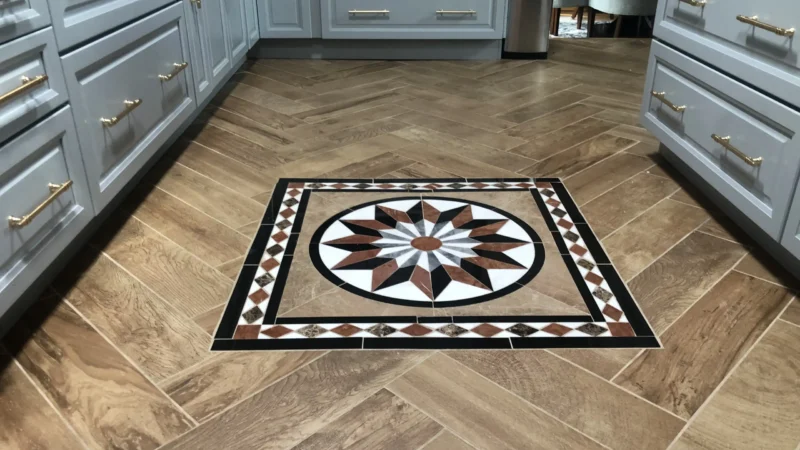
Yes. WC Floors can install a wide variety of tile patterns, including straight lay, diagonal, brick pattern, staggered, herringbone, chevron, basketweave, and custom layouts. Each pattern creates a unique visual effect, and we help you select the best option based on your style, room layout, and tile size.
Keep in mind that specialty patterns, such as herringbone, diagonal, or custom designs, require additional planning, precise cutting, and extended installation time. These patterns may require extra materials to accommodate angled cuts and may result in higher labor costs. During your consultation, our team will review all pattern options, explain their visual impact, and provide pricing and material recommendations to ensure a beautiful, long-lasting installation.
WC Floors can move appliances and certain pieces of furniture upon request, but this service must be included in your estimate. Standard tile installation does not automatically include appliance or furniture moving.
For appliances such as refrigerators, stoves, washers, and dryers, we can relocate them as long as the connections are safe, accessible, and in good working condition. However:
-
Built-in appliances
-
Gas appliances
-
Dishwashers
-
Appliances with damaged or old connections
may require a licensed technician to disconnect or reconnect safely.
Customers are responsible for removing all small items, décor, fragile objects, and personal belongings from the work area prior to installation. Heavy furniture, pianos, aquariums, and specialty items may require professional movers and are not included in standard services.
If additional labor is required on the day of the job because items were not moved as agreed, extra charges may apply and project delays are possible.
Have More Questions? We’re Here to Help.
WC Floors is committed to offering exceptional craftsmanship, transparent communication, and an outstanding customer experience.